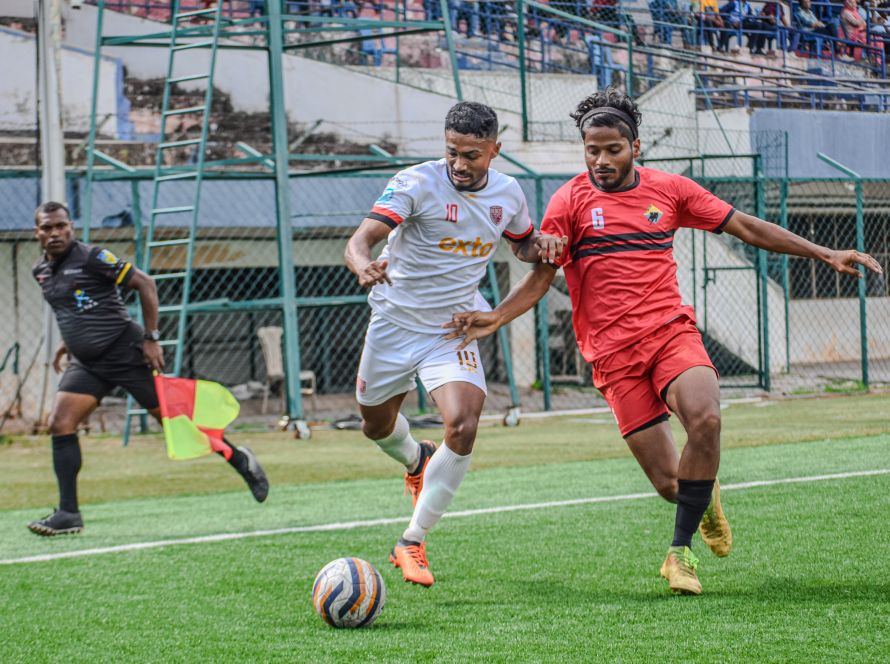
Modern football is dynamic, fast, and increasingly tactical, leaving no room for those who settle for the status quo. If you want to make an impact on the pitch, you have to be comfortable in the chaos, confident when spaces shrink, and decisive when markers close you down.
In professional gaming environments, defenders don’t wait, they arrive early, they pressure intelligently, and they force decisions in fractions of a second. The real edge comes not from raw pace or flair, but from how you handle the ball when every touch is contested and every directive counts.
For players serious about their craft, mastering dribbling under pressure is indispensable. It’s what turns tight situations into attacking opportunities, neutralises aggressive pressing, and gives you control when the tempo spikes.
This guide breaks down the practical principles and field-tested drills that can elevate your ability to manage 1v1 duels, execute tight-space manoeuvres, and operate with precision even when the defender is centimetres away. In this guide, we’ll take you from foundational technique to real game application in a way that builds confidence, creativity, and control.
Understanding Dribbling Under Pressure in the Modern Game
Dribbling under pressure is not about flashy tricks or long sprints into space. It is about control, awareness, and intent. In tight areas, speed comes from efficiency rather than acceleration. Every touch has a purpose. Every movement creates or closes a passing lane.
At the professional level, defenders are trained to delay, angle, and trap. They read body shape and anticipate patterns. To succeed, a player must combine close control drills with strong decision-making and physical balance.
This is where precision-based dribbling replaces pure speed-based dribbling. Small touches, constant scanning, and intelligent positioning allow you to manipulate defenders rather than react to them.
Core Principles That Define Dribbling Under Pressure
Before stepping into advanced drills, it is essential to understand the foundations that support consistent performance in tight spaces.
Ball control must be constant. Keeping the ball glued to your foot means using the inside, outside, and sole in quick succession. The ball should never be more than a step away. This allows instant reactions when a defender commits.
Body positioning is equally critical. A low centre of gravity gives you stability and agility. Bent knees and a relaxed upper body allow you to absorb contact while staying mobile. Balance is what allows skill to function under pressure.
Scanning separates good players from complete players. Your head should be active before and after receiving the ball. Reading the defender’s hips, stance, and distance helps you decide whether to hold, shift, or explode into space.
Shielding is the final layer. Your body becomes a tool. By placing yourself between the defender and the ball, you buy time, protect possession, and create angles for your next action.
1v1 Dribbling Under Pressure: Winning the Duel
1v1 dribbling is the purest test of confidence and technique. In tight areas, the goal is not always to beat the defender immediately. Sometimes it is to unbalance them, force a step, and create a reaction.
The key to successful 1v1 dribbling is patience paired with sudden intent. Approach the defender at a controlled pace. Stay side-on to keep multiple options open. Small touches invite the defender closer, drawing them into committing.
Once the defender shifts weight or opens their stance, that is your cue. A sharp change of direction, combined with a body feint, creates separation. Effective skill moves for football at this level are compact and efficient. Stepovers, inside-outside touches, and sole drags work best when executed close to the body and at the right moment.
Breaking Defensive Rhythm Through Directional Shifts
Change of direction is one of the most powerful tools in pressure dribbling. Defenders rely on predicting your next move. Sudden shifts break that rhythm.
A successful change of direction starts with deception. Sell one movement with your shoulders and hips before cutting sharply the other way. The cut itself should be explosive but controlled, using the outside of the foot or sole to keep the ball tight.
Practising changes of direction in confined grids improves your ability to stop, start, and pivot without losing balance. These movements are essential when navigating crowded midfield zones or escaping double pressure.
Close Control Drills for Tight-Space Mastery
Close control drills build the muscle memory needed to operate calmly in chaos. These drills should be performed in small areas with limited touches to simulate real match pressure.
One effective drill involves dribbling within a tight square using only two touches per step, alternating between inside, outside, and sole. The focus is on rhythm and touch consistency.
Another drill adds passive or active defenders who apply pressure from different angles. The objective is not to beat them but to protect the ball while moving laterally and diagonally. This reinforces shielding, scanning, and composure.
As intensity increases, decision-making improves. Your feet learn to respond automatically while your mind stays free to read the game.
Winning Space Through Body Positioning
Physicality plays a major role in dribbling under pressure. Shielding is not about strength alone; it is about timing and positioning.
Use your arm and shoulder to feel the defender without pushing. Keep your body between the opponent and the ball, shifting weight as they try to poke or block. Small lateral movements make it difficult for defenders to reach around you.
Training shielding in tight spaces builds confidence in contact situations. When you trust your ability to protect the ball, you stay calmer and more creative under pressure.
Combining Skill Moves with Game Awareness
Skill moves for football are tools, not goals. Under pressure, the best moves are those that create immediate advantage.
Compact feints such as shoulder drops, toe taps, and quick sole rolls work best in tight areas. These moves require minimal space and can be linked smoothly with changes of direction.
What elevates these skills is awareness. Knowing where your teammates are allows you to decide whether to dribble, release, or reset. Dribbling under pressure is most effective when it leads to progression, not isolation.
Building Mental Composure Under Pressure
Technical ability only shines when supported by mental composure. Pressure situations test confidence and focus.
Training under constraints helps. Limited space, time restrictions, and numerical disadvantages force quicker thinking. Over time, this builds comfort in uncomfortable moments.
Breathing, posture, and decision-making are all connected. Staying relaxed in the upper body allows smoother footwork. Calm players see solutions earlier and execute cleaner actions.
Translating Training into Match Impact
The transition from training ground to match day is where mastery is proven. Dribbling under pressure must feel natural, not forced.
Focus on recognising triggers. A defender stepping out, a teammate creating a decoy run, or a moment of imbalance are signals to engage. Trust the habits built through repetition.
Consistency matters more than flair. Winning small duels repeatedly shifts momentum and opens space for the entire team. This is how individual skill elevates collective performance.
Drills That Simulate Real Pressure Scenarios
Effective drills mirror match realities. Tight rondos with directional goals encourage quick touches and sharp changes of direction. 1v1 channels with limited width emphasise shielding and timing.
Progressions can include recovery defenders or scoring incentives that reward successful escapes from pressure. These layers replicate the intensity and unpredictability of competitive play.
Each drill should demand focus, intent, and accountability. Quality over quantity ensures meaningful improvement.
Evolving as a Complete Pressure-Resistant Player
Dribbling under pressure is a journey, not a single skill to master. As opponents adapt, so must you. Refining close control drills, sharpening 1v1 dribbling, and improving change of direction keeps your game unpredictable.
At Rebels FC, the pursuit of excellence is rooted in discipline, resilience, and courage to challenge the ordinary. Players who thrive under pressure do not shy away from tight spaces; they welcome them. They trust their training, their instincts, and their hunger to rise.
When you commit to mastering dribbling under pressure, you do more than protect the ball. You control tempo, create solutions, and shape moments that define matches. That is where professional footballers separate themselves, and where the next level truly begins.