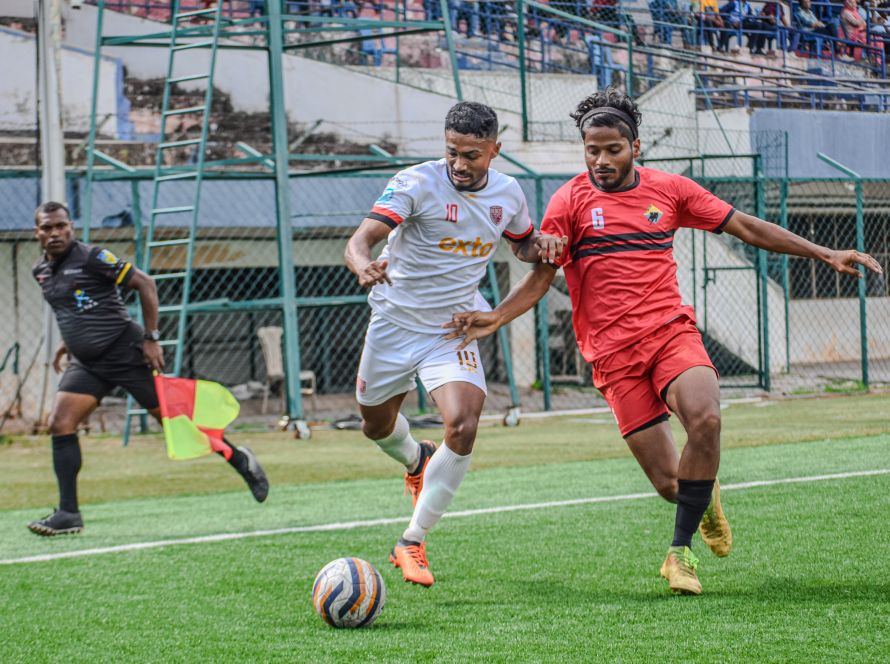
Football is not just a physical contest of speed, strength, and skill. It is a test of your mind every single minute you are on the pitch.
One misplaced pass. One missed chance. One decision that does not go your way. Failure is inevitable in football. What defines you is not whether it happens, but how you respond in the next five seconds.
At Rebels FC, the game is built on courage, discipline, and belief. The phoenix on the badge is not decoration. It represents rising, again and again. For professional players chasing excellence, mental toughness in football is not optional. It is the difference between reacting emotionally and responding intelligently. It is the difference between playing safe and playing brave.
If you want to perform when the game tightens, when the crowd grows louder, and when the stakes rise, your football mindset must be trained as seriously as your first touch or finishing. This is how you build confidence, sharpen focus, and handle mistakes like a true Rebel.
The Edge That Separates Good from Elite
Mental toughness in football is the psychological ability to perform at your highest level under pressure, after setbacks, and during intense competition. It means staying committed to your role, your tactical discipline, and your standards regardless of the scoreboard.
For a professional player, this translates into four core pillars:
- Resilience: You reset immediately after conceding a goal or missing a chance.
- Concentration: You stay “Ready Every Down,” fully locked into your task.
- Confidence in football: You trust your preparation and your ability.
- Emotional control: You stay composed, even in chaos.
At Rebels FC, excellence is not built on hype. It is built on standards. A mentally strong player does not look for external validation. He or she looks inward and asks: Am I executing my role? Am I making the right decisions? Am I fully present?
When your attention shifts from distractions to controllables, your performance stabilizes. That is the foundation of elite mental toughness in football.
Building a Professional Football Mindset
Your football mindset determines how you interpret every moment in the game. Two players can experience the same mistake. One sees it as damage. The other sees it as data.
A professional mindset is process-driven. It focuses on:
- Positioning before the ball arrives
- Decision-making speed
- Tactical awareness
- Work rate without the ball
- Immediate recovery runs
Instead of replaying errors in your head, you move into the next action. This ability to shift quickly is not accidental. It is trained.
At Rebels FC, the philosophy of rebelling against the ordinary means refusing average reactions. The ordinary player hesitates after a mistake. The Rebel demands the ball again. That mindset sends a message to teammates and opponents alike.
A strong football mindset also includes accountability. You review your performance with honesty. You analyse positioning, scanning habits, and execution. You improve deliberately. Growth becomes a habit, not a mood.
Confidence in Football: Earned Through Preparation
Confidence in football trials is not an emotional surge or a performance for others. It is a steady belief in your ability to execute your role under any circumstances.
When you know you have trained under match-like intensity, your mind settles in big moments. This is why training under pressure matters. Simulated high-stakes scenarios condition your nervous system to stay stable.
To build lasting confidence in football:
1. Train with specificity
Recreate match situations. Final-third decision-making. Defensive transitions. One-touch combinations in tight spaces. The more familiar the scenario, the calmer your response.
2. Use visualisation intentionally
Before games, see yourself executing key actions. Winning aerial duels. Breaking lines with passes. Timing your runs perfectly. Visualisation strengthens neural pathways and reinforces belief.
3. Develop consistent routines
Pre-game routines, breathing patterns, and warm-up sequences anchor your mind. Consistency reduces uncertainty.
Confidence grows when preparation meets opportunity. At Rebels FC, standards are high because belief must be earned. When you have done the work, stepping into pressure feels natural.
Mental Toughness in Football During High-Pressure Moments
Handling pressure is a skill. Finals. Trials. Big league fixtures. These environments test emotional control and clarity.
Pressure is simply expectation combined with importance. The key is narrowing your focus.
Instead of thinking about consequences, focus on your job description:
- As a centre-back: win your duels and organise the line.
- As a midfielder: control tempo and scan constantly.
- As a forward: attack space and stay aggressive in the box.
By reducing the game to controllable actions, your brain stays grounded. Breath control is critical here. Slow, deliberate breathing lowers heart rate and sharpens awareness.
Another powerful technique is cue words. Simple internal commands such as “scan,” “press,” or “calm” help you redirect attention quickly. This keeps your football mindset task-oriented rather than outcome-obsessed.
At Rebels FC, intensity is embraced, not avoided. High standards create high-pressure environments in training. When match day arrives, it feels familiar. That familiarity builds composure.
Focus Drills That Strengthen Mental Toughness in Football
Concentration can be trained just like passing accuracy. Focus drills are essential for maintaining performance across 90 demanding minutes.
Here are practical focus drills used by elite players:
1. Distraction Training
During small-sided games, introduce controlled distractions such as noise, time limits, or sudden tactical changes. The objective is to execute cleanly despite unpredictability.
2. Decision-Speed Rounds
Create drills where players must make one-touch or two-touch decisions under defensive pressure. The faster the mind processes, the less space mistakes occupy.
3. Mindfulness Reps
Short daily sessions of mindfulness improve present-moment awareness. Sitting quietly, focusing on breath for five minutes trains your mind to return to the present quickly after disruptions.
4. Reset Protocols
After any mistake in training, immediately sprint into the next action. Physically moving forward reinforces psychological reset. Over time, this becomes automatic.
These focus drills build a habit of mental recovery. A mentally tough player never drifts mentally. He or she remains engaged in every phase of play.
Handling Mistakes Without Losing Momentum
Mistakes are part of football’s rhythm. What elevates professionals is their response speed.
Handling mistakes effectively involves three steps:
Acknowledge
Recognise the error without emotional exaggeration. Clear recognition prevents denial and confusion.
Reset
Use a physical cue. Clap your hands. Take a deep breath. Adjust your socks. This signals your brain to move on.
Re-engage
Demand involvement in the next phase. Ask for the ball. Press aggressively. Track back with intent.
The longer you dwell, the more control the mistake has over you. The faster you reset, the more control you regain.
At Rebels FC, growth is built on resilience. The phoenix symbolises rebirth not once, but repeatedly. Every setback becomes fuel. Every missed chance becomes preparation for the next one.
Professional players understand that one moment does not define them. Consistency does.
Emotional Control and Competitive Fire
Elite performance requires intensity. It also requires control.
Emotional regulation means staying balanced. Too much tension tightens muscles and clouds judgment. Too little energy reduces sharpness. The goal is optimal arousal.
Breathing exercises, body awareness, and self-talk help regulate this balance. Positive self-talk does not mean unrealistic affirmations. It means constructive instruction:
“Stay compact.”
“Strong first touch.”
“Win the second ball.”
These internal cues reinforce confidence in football and maintain discipline. Discipline is central to the Rebels identity. Tactical awareness, structured play, and dynamic intensity all depend on emotional stability.
Controlled aggression becomes an advantage. It keeps you competitive without compromising clarity.
Becoming a Rebel: Mastering Mental Toughness in Football
Mental toughness in football is not developed overnight. It is forged in demanding training sessions, in honest self-reflection, and in moments when the game tests your character.
At Rebels FC, players are trained to rebel against average reactions. To rise after every setback. To compete with intensity and intelligence. To treat mistakes as information and pressure as opportunity.
Your football mindset must match your ambition. Your confidence in football must be built through preparation. Your ability in handling pressure must be sharpened through repetition. Your focus drills must become routine.
When your mind is trained to stay present, resilient, and disciplined, your performance stabilises. You stop riding emotional highs and lows. You become reliable. And reliability builds trust within the team.
In football, talent opens the door. Mental toughness keeps you on the pitch when the stakes are highest. The game will always test you. The Rebel chooses to rise, every single time.